
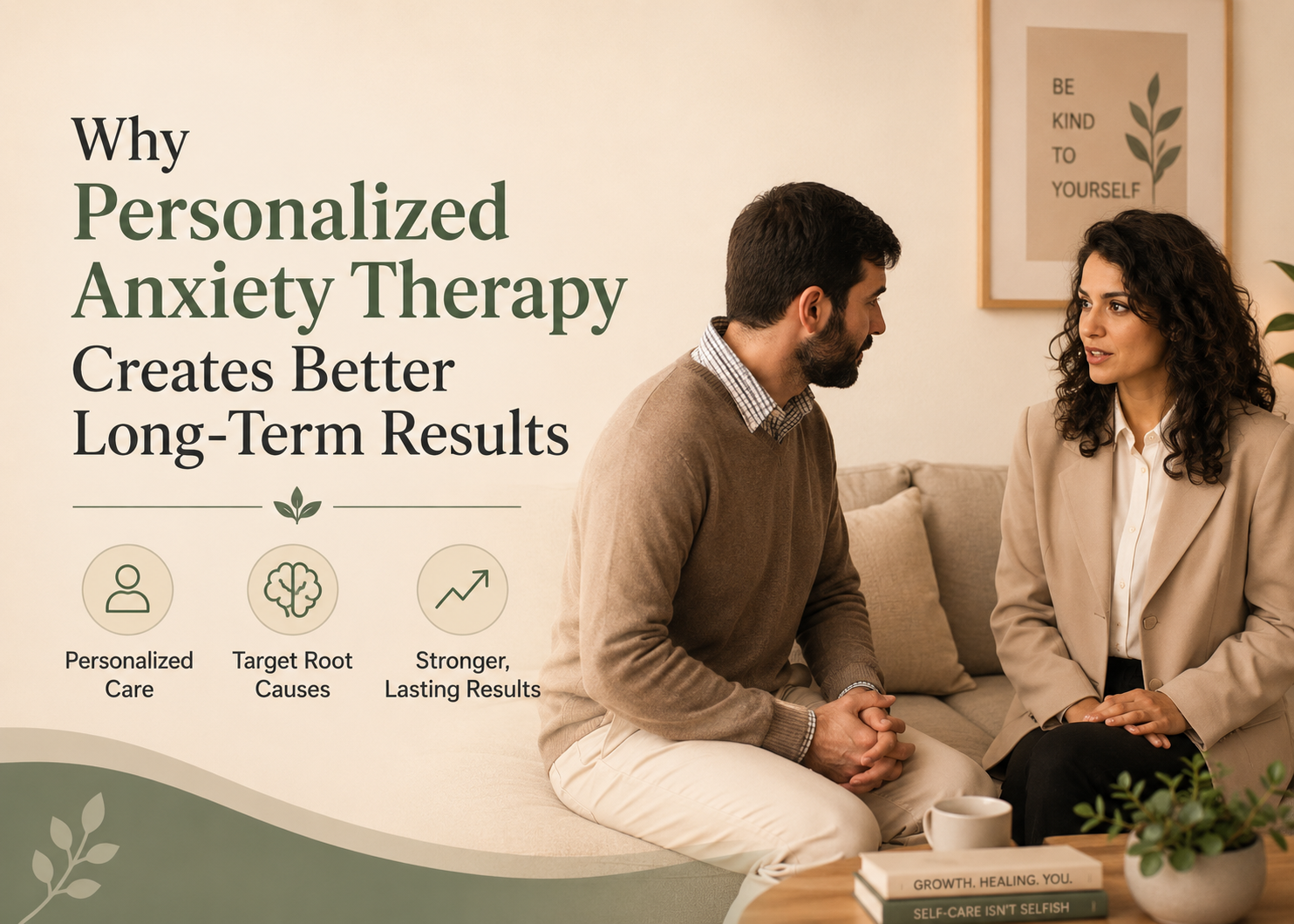
Everyone experiences anxiety differently. Some perceive it as an influx of racing thoughts when they are trying to fall asleep, while others might be struck with panic before a meeting, get caught up in the constant loop of overthinking, or just feel emotionally drained all the time. If you are looking for a trusted anxiety therapy in Sacramento, you probably also understand that it is quite disheartening when the advice you get is too generic or way off your real-life experiences.
Here’s the thing… anxiety is very personal. Your ways of dealing with stress, emotional triggers, and coping skills are all intertwined with your life experiences. That’s why therapy tailored to your needs often leads to more effective, longer-lasting results than generic or one-size-fits-all methods.
Table of Contents
- Why Anxiety Treatment Is Not One-Size-Fits-All
- What Personalized Anxiety Therapy Actually Means
- Benefits of Personalized Anxiety Therapy for Long-Term Recovery
- Why Generic Anxiety Advice Often Falls Short
- How to Find the Right Therapist Near You in Sacramento
- What to Expect During Personalized Anxiety Counseling
- When Anxiety Therapy Starts Creating Real Change
- FAQ Section
Why Anxiety Treatment Is Not One-Size-Fits-All
Everyone’s anxiety manifestations differ.
One individual may have panic attacks, while another might constantly worry, suffer from social anxiety, or experience burnout-related stress and yet be “high functioning” externally.
This is frequently when anxiety becomes tiring. You try tips that helped others, but still, your anxiety can be overpowering.
To illustrate, a worker burnt out might need help with handling stress and setting limits, while a person experiencing panic symptoms might require understanding of bodily reactions to fear and ways to lessen avoidance behaviors.
Generalized approaches often miss these differences. According to the National Institute of Mental Health (NIMH), anxiety disorders can vary significantly in symptoms and severity, which is why treatment should be individualized.
What Personalized Anxiety Therapy Actually Means
Personalized therapy is a very different approach from the cookie-cutter, one-size-fits-all methods you often see in programs and therapies. So, instead of applying the same strategy to everyone, it is based on your emotional experience.
Identifying your specific triggers
Anxiety is something that is exhibited in patterns. If not handled well, certain situations, people, or stressors may even trigger feelings of fear, tension, or overthinking.
For instance, a person who is afraid of letting others down might experience anxiety every time there is a conflict at work or in the family.
Being aware of those patterns gives therapy a chance to be much more pinpointed and effective.
Delving beneath the surface
Customized therapy aims not just to relieve the symptoms of anxiety but really dig deep to expose and understand the underlying reasons.
Many times, anxiety is related to ongoing stress, trauma that has not been dealt with, striving too hard for perfection, or simply one’s being worn out over time.
What people find out is that anxiety is not just about “overthinking.” It is also about the nervous system being in a state of constant survival mode.
Shaping your therapy goals in line with your everyday life
Therapy has to be relevant to the issues you face in your daily life. This could mean optimizing your sleep, managing the physical symptoms of panic, reducing work pressure, or even getting to your core emotions and expressing them in healthier ways within your relationships.
Depending on what works best for you, the therapist might utilize methods like Cognitive Behavioral Therapy (CBT), mindfulness-based therapy, or trauma-informed care. The American Psychological Association (APA) considers CBT to be a very effective method of treating anxiety disorders. And the answer is yes, this is something more people do than they think.
Benefits of Personalized Anxiety Therapy for Long-Term Recovery
Improved emotional self-awareness
A lot of folks suffer from anxiety for quite some time, not really knowing what sets it off for them.
With therapy, you can finally get to know your emotional patterns so you can nip stress in the bud before it turns into panic, freezing, or emotional fatigue.
Better coping mechanisms that really work
First aid tips might do the trick for the moment, but handling anxiety in the long run calls for more than just surface emotional skills.
One person who struggles with racing thoughts can get help through CBT techniques, while someone else could respond better with grounding or mindfulness practices.
The purpose is to develop methods that suit your character and lifestyle.
A decline in anxiety relapse
One-on-one anxiety therapy uncovers life patterns that contribute to the recurrence of anxiety, such as unmanaged stress, denial of emotions, or striving for perfection.
Take, for instance, a person who invariably forces themselves to work while being tired. He or she may finally come to understand the signs of fatigue, even before burnout,, and thus avoid reaching a breaking point again.
Greater confidence during stress
With time, therapy can help you find peace even in the most stressful situations.
For example, a person who used to shy away from giving presentations might increasingly become less anxious while speaking at work. A person who has panic attacks might find themselves getting back to driving or socializing more safely.
Firstly, confidence in one’s character gradually builds through many instances of helping, helping one feel emotionally safe and resilient.
Why Generic Anxiety Advice Often Falls Short
Considering the vast amount of anxiety remedies available on the internet, it’s really quite easy to get overwhelmed by too much information.
Some of the ways you try to alleviate your anxiety include breathing exercises, self-help books, productivity routines, or social media advice, yet your anxiety is always there.
In reality, generic advice misses its mark most of the time as it doesn’t provide any context.
Trauma-related anxiety and stress-related burnout are two very different issues that require quite different interventions, for instance.
Sometimes, therapy mismatch can become a source of discouragement as well. A Sacramento resident decided to dedicate a couple of years to self-help strategies and brief therapy sessions, mostly focused on “positive thinking.” Even though some of the methods provided short-term relief, the heavy emotional pressure and perfectionism never quite got attention.
That is usually the point where individually tailored treatment matters most.
How to Find the Right Therapist Near You in Sacramento
Looking for a “therapist near me, Sacramento” can be very stressful, especially if you are already emotionally at your limit. On the other hand, choosing the one who matches your needs is very important.
Among the anxiety therapy Sacramento alternatives, look at:
- Licenses and professional skills
- Experience with anxiety and panic disorder symptoms
- Therapeutic style and communication method
- Feeling comfortable and able to trust during the sessions
- Readiness to tweak treatment plans
Some people like a very methodical therapist. Others feel more secure when the therapist is very conversational and emotionally supportive.
If you are doing an online search for a “therapist near me, Sacramento,” reading the biographies of therapists will give you a good idea of whether their approach is emotionally supportive and easy to relate to.
What to Expect During Personalized Anxiety Counseling
Starting therapy might be a bit scary at first. Luckily, therapists know that and will probably go at a pace that feels good to you.
Initial assessment and goal setting
The first few sessions are all about getting to know your symptoms, what’s causing your stress, and what you want out of therapy.
They might ask you questions about your sleep, panic attacks, how work stresses you, or if you’ve had therapy before, etc.
Creating a customized treatment plan
After a while, when the therapist can clearly see the patterns, a therapy plan can be created based on what works best for you.
So, if you are having panic attacks, you may want to decrease them; if you find it hard to control your emotions, you might want to improve that; or, if you are dealing with anxiety because of burnout, you may want to learn how to manage it. All three could be included in the therapy goals, among others.
Ongoing progress tracking
Besides measuring the success of therapy by whether the anxiety completely disappears or not, one should look at other things as well.
That is why, for example, saving progress can be getting a better sleeping pattern, an increased rate of stress recovery, or simply a smaller list of avoided situations.
Adjusting therapy techniques over time
Individual therapy does not have to be rigid. If certain methods are not effective enough, your psychotherapist does not have to stick to them; they can change the approach instead of repeating the same techniques over and over.
Do You Want to Make the First Move Toward Improvement?
If you are living with anxiety, feeling emotionally drained is kind of a real thing, especially when you’ve been battling it alone for a while. With personalized therapy, you can get the space to notice what really sets your stress off, try better coping methods, and slowly return to emotional confidence, like one step at a time.
If you’re searching for anxiety therapy in Sacramento, an approach that’s tailored to you, yet still encouraging, can help you feel more steady, more heard, and more emotionally supported day to day.
FAQ Section
How do I know if I need anxiety therapy?
If anxiety is messing with your sleep, job, relationships, or daily life, then therapy may be the right move. You don’t really have to wait until everything gets really bad, like symptoms being “very severe,” before you reach out for support.
How long does anxiety therapy usually take?
There isn’t one fixed time frame, because it depends on your symptoms and what you’re aiming for. Some people start noticing changes within a couple of months, while others get more value from support over a longer period.
What type of therapy works best for anxiety?
CBT or Cognitive Behavioral Therapy is one of the main approaches used for anxiety, and it’s common for a reason. That said, mindfulness-based strategies and trauma-informed therapies can also be really helpful; it mostly comes down to what you personally need.
Can personalized anxiety therapy help with panic attacks?
Yes, absolutely. A tailor-made plan can help uncover your panic triggers, ease fear-driven thoughts, and even teach you practical skills that, once you master them, can lower the severity and frequency of panic attacks.